As a school counselor, I know we’re always looking for practical tools to better understand our students and support them more effectively. One of my favorite tools to use– that’s both insightful and easy to use– is the forced choice survey, and if you haven’t used one yet, you’re about to discover a new favorite!
What is a Forced Choice Survey?
Unlike traditional surveys that allow students to rate everything as “important” or “agree,” a forced choice survey asks students to choose between two (or more) options. There are no neutral answers here—just honest prioritization. This method helps us gather meaningful data by asking students to make trade-offs and clarify what really matters to them.
For example, instead of asking, “Is friendship important to you?” we might ask:
- “Would you rather have one close friend or be liked by everyone in your class?”
It’s like a personality sorting tool, values checker, and preference decoder all rolled into one!
Why Use Forced Choice Surveys?
Forced choice surveys are especially helpful in counseling because they:
- Encourage students to reflect on their thoughts and values.
- Help you identify patterns in behavior or mindset.
- Provide quick, actionable data to guide interventions.
- Can be used in individual, group, or even classroom settings.
Plus, students often enjoy them because they feel more like a game than a test.
Real-World Applications in Counseling
Here are some ways you can implement forced choice surveys in your counseling program:
1. Behavioral Interventions
When students are struggling with behavior, a forced choice survey can help pinpoint what’s driving their actions. For example:
- “Do you speak out in class because you feel excited or because you’re bored?”
- “Would you rather have free time or a reward for staying on task?”
This gives you insight into what motivates them and how to tailor interventions.
2. Goal Setting and Progress Monitoring
Before starting a small group or individual counseling cycle, a forced choice survey can help students clarify goals. You can also repeat the survey later as a pre/post comparison tool to show growth.
3. Self-Awareness and SEL Lessons
Use these surveys as conversation starters. In SEL lessons, students can compare their answers with peers, promoting empathy and understanding. It’s also a great way to lead into lessons about values, communication, or decision-making.
4. Career Exploration
Help students identify their interests and strengths with career-focused forced choice items:
- “Would you rather solve problems or help people?”
- “Would you rather work with your hands or with numbers?”
This ties directly into career readiness lessons and postsecondary planning.
Hear More on the Podcast
Want a deeper dive into how forced choice surveys can strengthen your school counseling program? Be sure to listen to my podcast episode all about it on Counselor Chat! I break down how to use them effectively and share some real-life examples you can use right away.
🎧 Listen now on your favorite podcast app or at Counselor Chat
Tools to Save You Time
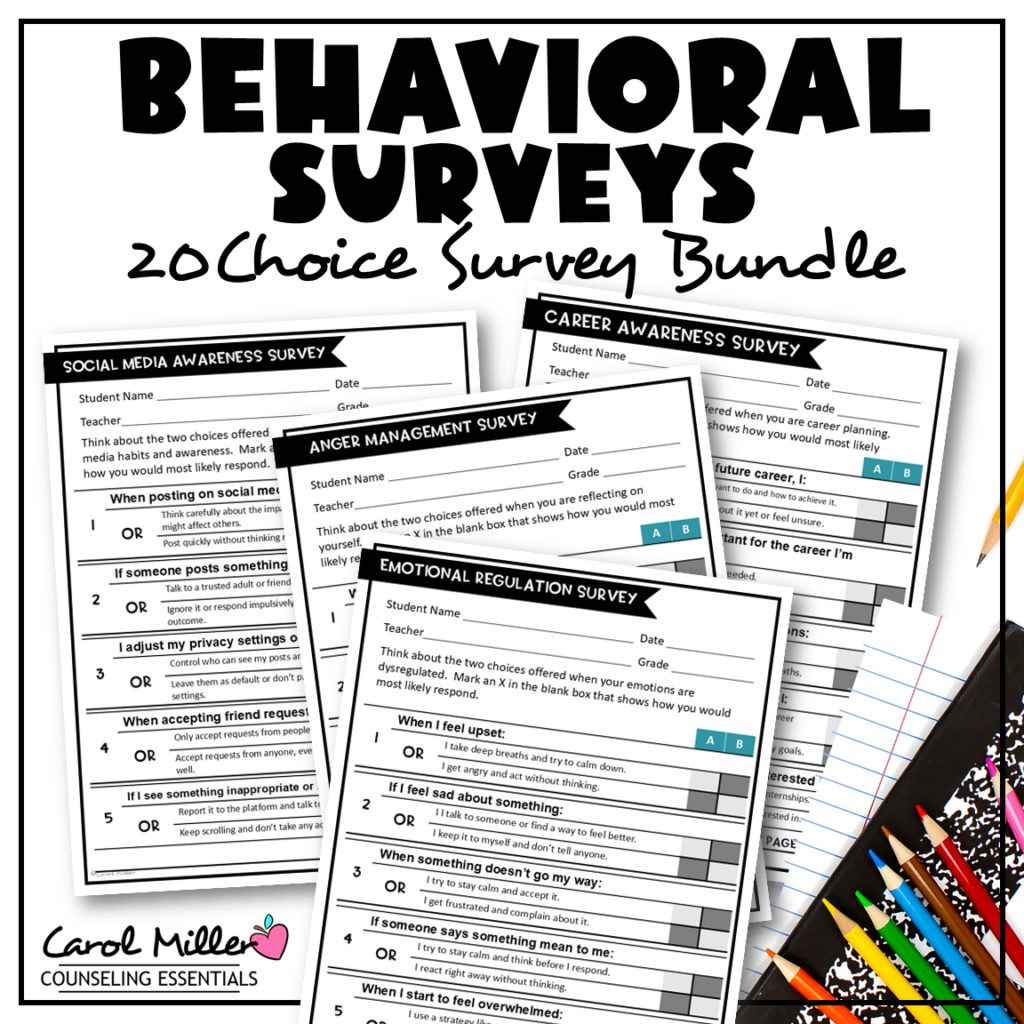
I’ve also put together several ready-to-use forced choice surveys to make things easier for you! These include surveys focused on:
- Leadership and confidence
- Behavior triggers and motivation
- Career values
- Friendship and social dynamics
You can find them in the Perks Counseling Content Club or right here on TPT (add your link here). Whether you’re using them in small groups, SEL lessons, or behavior plans, they’re designed to give you data that’s actually helpful.
Tips for Success
- Keep it age-appropriate. Use visuals or simplified wording for younger students.
- Use 8–15 items to keep the survey short and engaging.
- Follow up with discussion. The magic is in the reflection, not just the results!
- Consider digital formats like Google Forms or paper-and-pencil options, depending on your setting.
Forced choice surveys don’t just help students make decisions—they help counselors make data-driven ones too. Whether you’re aiming to support behavior change, strengthen self-awareness, or fine-tune your small group sessions, this simple tool packs a powerful punch.
Let’s keep making student voices count—one choice at a time.